Co-founder of Marietta Software Solutions. Former principal engineer at a Fortune 100 financial services firm. Has led or overseen every engagement Marietta has undertaken. Writes occasionally for Field Notes when he has something to say.
Marietta Software Solutions was founded in 2009 with the belief that large organizations deserve the same quality of engineering thinking that startups take for granted. Seventeen years later, that belief hasn't changed.
Marietta Software Solutions was started by Kai Ellington and two colleagues in a converted mill building on Roswell Street, Marietta, Georgia, in the spring of 2009. The firm was named for the city, and the city was chosen because it was home — not because it was a prestigious address.
The early work was in financial services and healthcare IT, two industries where the gap between what technology could do and what enterprises actually ran was particularly large. That gap has since widened, and then narrowed, and then widened again in a new dimension. The AI-led transformation work that now constitutes the majority of our engagements grew directly out of the data and platform work we were already doing.
We opened studios in Charlotte, Boston, and London as our clients needed us there. We have no plans for further expansion — we would rather be a firm with four excellent studios than twelve adequate ones.

Co-founder of Marietta Software Solutions. Former principal engineer at a Fortune 100 financial services firm. Has led or overseen every engagement Marietta has undertaken. Writes occasionally for Field Notes when he has something to say.
Leads the firm's data foundations and AI strategy practices. Joined Marietta in 2014 from a research role at MIT. Has led engagements with four of the ten largest US banks and three of the top-ten global pharmaceutical companies.
Leads platform modernization and agentic systems engineering. Joined in 2016. Designed the migration architecture for the Oak & Stone Insurance claims transformation — the engagement Marietta is most frequently asked to explain.
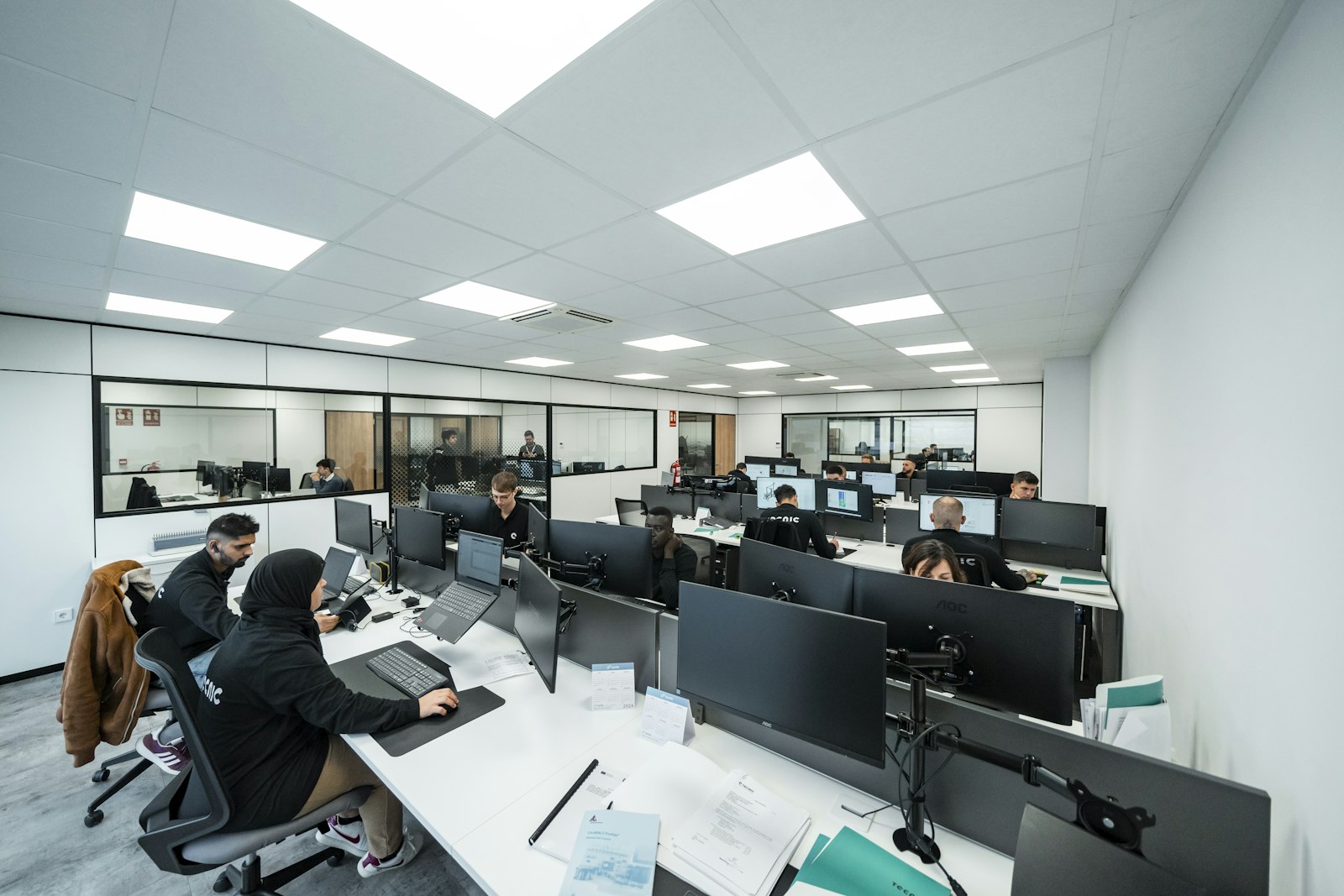
We do not sell methodology. The work always starts in the same place — quiet, on the floor, with a notebook — and the shape of the engagement emerges from what we find.
Two weeks, on-site. We meet your engineers, your operators, the people who actually know how the system breaks. We do not begin with a framework.
We write a short, candid document. It is rarely the document leadership expects. We have never had one returned.
Joint teams, your codebase, your release cadence. We do not deliver and disappear. We deliver, document, and transfer knowledge as we go.
When your team can run without us, we leave. The measure of a good engagement is how invisible we become. We have been turned down three times by clients who wanted to keep us past the point of necessity.
These are not values we put on a wall. They are things we have found to be true after doing this work for seventeen years, and that we use to make decisions when the right answer isn't obvious.
We do not hide behind methodology. When we are wrong, we say so. When we disagree with a client decision, we say so — once, clearly, and then we support the decision made.
Semantic layers, data lineage, observability, test coverage. We have shipped enough AI programs to know that the models are never the problem. The foundations are always the problem.
We turn down engagements we cannot resource properly. We have turned down work from clients we admire when the timing was wrong. We would rather lose revenue than deliver a program we cannot stand behind.
The business model is straightforward: deliver programs that work, and clients will return. Scope creep, unnecessary extensions, and work-for-work's-sake are incompatible with the kind of relationships we want.
We are a small firm that takes on a limited number of engagements. The people we hire must be comfortable working alongside clients, disagreeing with people more senior than themselves, and being wrong in public. We hire for judgment before skill, though skill is not optional.
We are currently hiring in the following areas. All roles are hybrid — you will be expected to be on-site with clients regularly, at offices where we have them, and remote when the work allows.
Don't see a role that fits? We occasionally hire outside of open positions for the right person. Send a note →